Asanas
Yuva Yoga Basic 16
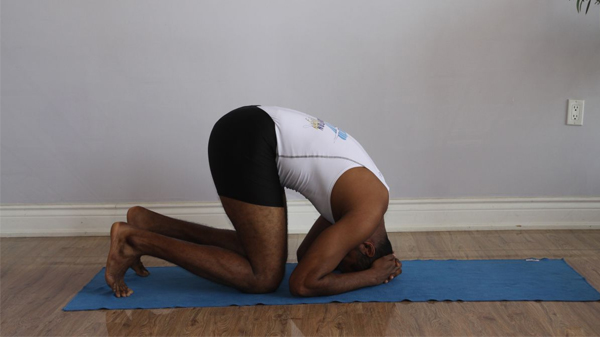
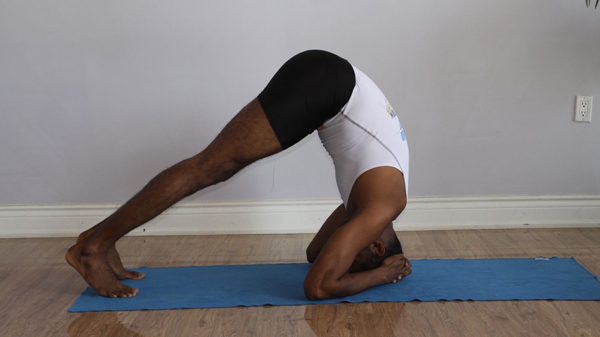
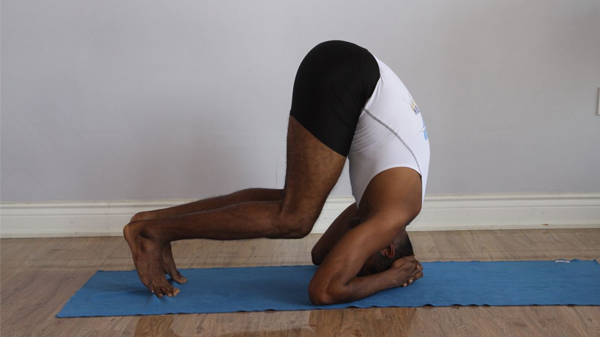
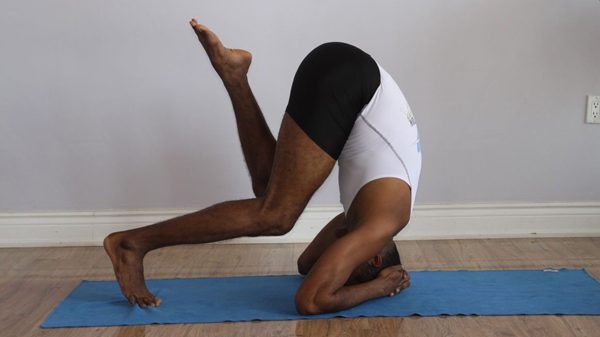
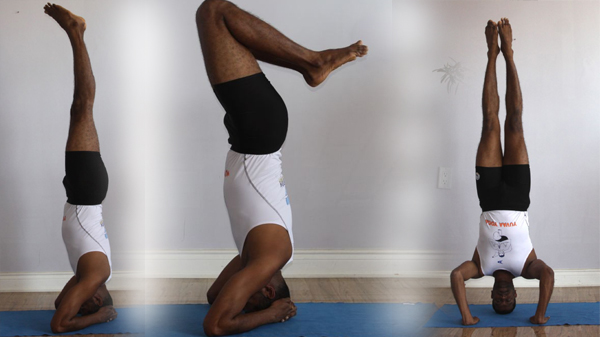
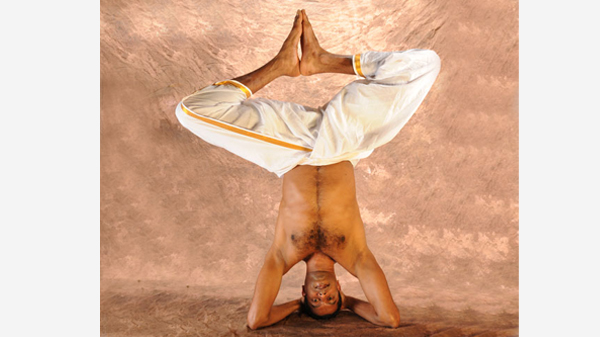
Variation: Tripod headstand Very good for beginners to develop confidence without the use of the wall.Sit is vajrasana
Take your wrists in line with your knees with your palms spread wide
Bring your head to the mat so that your head, knees and wrists are making a triangle
Gently press your toes towards the mat and stretch your hips to the ceiling, straightening your knees
Bend both of your legs and bring your knees to your elbows one by one
Gently roll your hips to stretch your legs towards the ceiling
Head, neck, hips, heels should be in a straight line
Breathing is deep and smooth
Energetic focus is on the navel region
Weight shifting should be 40 percent on your elbows (20 on each forarm) and 60 percent on your head
Hold for 8 to 10 breaths
Benefits:
This is known as the king of all postures
In this posture blood rushes to the head which brings more oxygen to your brain, cerebelum, and cortex
Helps to bring a natural glow to the face because of the increased flow of blood to this region
Also improves the functioning of the sensory organs (eyes, nose, ears)
Prevents and cures sinusitis, headaches and partial deafness
Develops the taste receptor cells and salivary glands (improving functioning of taste buds)
This posture is the pathway towards moksha (emancipation/liberation) since all of the chakras and all of the glands are activated within the body
Name: Shirasa means head, and the head is the most important organ for the body and this pose is done by the head thereby receiving its name.
See Photos
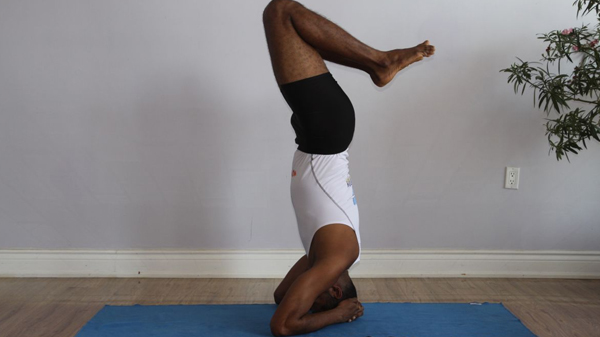
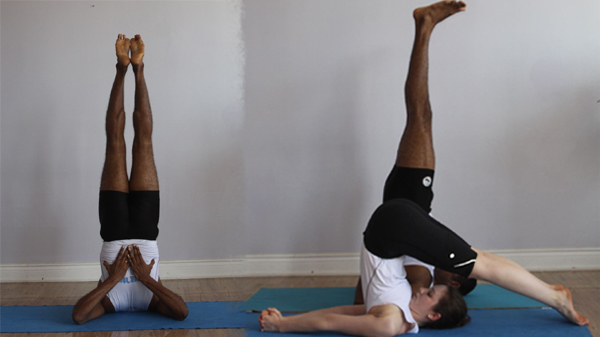
Shirshasana
Sit down in vajrasana
Interlock your hands and keep them in front of your knees by placing the crown of your head to the mat in between your palms
Gently press your toes towards the mat and stretch your hips to the ceiling, straightening your knees
Walk towards your head to stack your hips in line with your neck
Slowly breathe in to lift both of your legs off of the mat
Gently roll your hips to stretch your legs towards the ceiling
Head, neck, hips, heels should be in a straight line
Breathing is deep and smooth
Energetic focus is on the navel region
Weight shifting should be 40 percent on your elbows (20 on each forarm) and 60 percent on your head
Hold for 8 to 10 breaths
See Photos
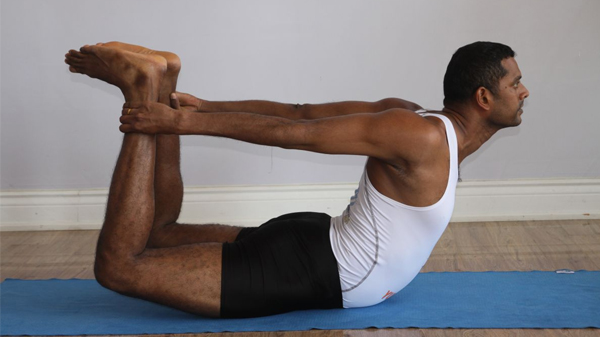
Dhanurasana
Lie in a prone position
Bend both legs and try to catch ankles with hands
Extend your legs so that you pull your chest, shoulders and cervical muscles away from the mat
Let your breathing be deep and smooth
Try to maintain a 90 degree angle in the knees, creating a deep arch in the lower back
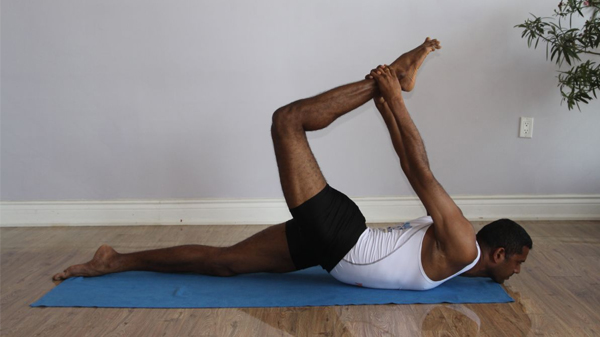
Variation: Ardha Dhanurasana Lie in a prone position
Bend your right leg and take hold of your ankle with both hands
Press your chest towards the mat and gently pull your ankle towards your head
Keep the other leg straight and fully grounded
Hold for 8 to 10 breaths.
Repeat on other side.
Benefits: Helps to reduce excess fat from abdomen, hips, thighs
Prevents and cures constipation
Activates your kidneys, liver and spleen
Strengthens the uterus
Stretches the solar plexus where the 12 major nerves interconnect
Increases vitality and life force
Stretches your spine completely
Helps to cure and prevent cervical spondylosis, frozen shoulder, or any spinal deformity
Helps to open lungs enabling deeper inhales (more oxygen)
Foundation posture for backbends
Name: Dhanur means bow; this posture resembles a bow, ardha means half; ardha dhanurasana resembles a half bow
The action of the body is to create a bow in order to reach an arrow towards enlightenment
See Photos
Sarvangasana
Lie down in a supine position
Bend your knees and roll your hips up towards the ceiling
Place your palms on your lower back placing elbows on mat
Gently stretch your legs in line with your shoulders
Your shoulders, hips, knees and ankles should be in a straight line
Chest is touching your chin to create jalandara bhanda (chin lock)
Breathing is deep and smooth
Hold for 8 to 10 breaths
Variation: Halasana--Bring your legs to the mat behind your head keeping them straight and extend your arms along the mat, interlocking your hands. Hold for 8 to 10 breaths.
Benefits: This posture is known as the queen of all postures
This posture cures and prevents leprosy (proven in 1942 in Rishikesh, Sivananda ashram) since it activates the thyroid and parathyroid glands regulating growth hormones
This posture activates all the glands in the body
Helps to cure and prevent bone marrow loss
Purifies your blood
Strengthens the immune and the endocrine systems
Helps to cure and prevent stress and emotional imbalances
Stagnant blood from the lower body is drained back to the heart thereby improving the supply of fresh blood to these parts and the entire circulatory system.
Lung capacity is increased since the diaphragm must work against gravity in this posture thereby improving abdominal respiration and aiding in the treatment of asthma. Toxins are flushed from the respiratory system further improving the overall functioning of this system.
Preventative and curative for varicose veins.
Releases gravitational pressure on anus muscles which in turns helps hemorrhoids.
Regulates pranic flow thus increasing energy and positively affecting all of the bodily systems.
See Photos
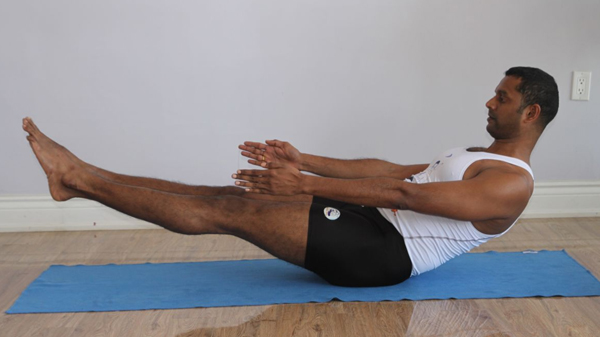
Navasana
Lie down in a supine posture
Bend your elbows to raise your upper body
Raise torso 30 degrees away from mat
Gently raise your lies such that your big toes are level with your eyes
Head is relaxed and eyes gaze at big toes
Stretch your hands towards your feet in line with your shoulders (works rectus)
Let your breathing be deep and smooth
Hold for 8 to 10 breaths
Variations: raise your body 60 degrees by pushing your palms back into the mat (works obliques)
Benefits: Strengthens and develops your core muscles (obliques, rectus and lower abdomen)
Reduces fat around hips, waist and thigh regions
Activates your intestines and your kidneys
Increases vitality by strengthening the force of the breath
Cures and prevents constipation
Name: Nava means boat--boats save people’s lives in the sea, so regular practice lengthens your lifespan by preventing diseases and strengthening the entire system
See Photos
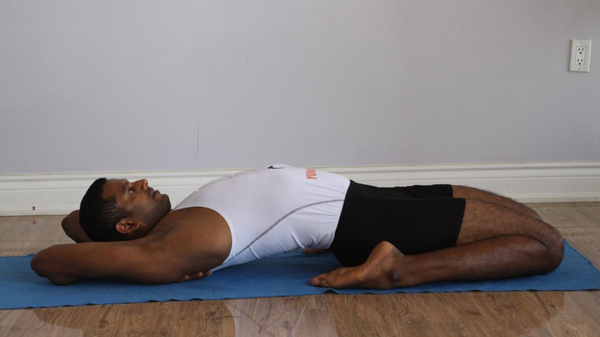
Vajrasana
Sit in a kneeling posture
Reach your buttocks to the ground keeping your knees together and bringing your toes outside your hip line
Gently bend your elbows to reach your upper body to the mat
Once you are getting comfortable, reach fully down placing your left palm to your right scapula and your right palm to your left scapula
Relax your head and rest it on your forarms
Breathing is deep and smooth
Keep your buttocks and knees grounded
Hold for 8 to 10 breaths
Benefits: This is the only posture which can be done anytime of the day especially after mealtime
Speeds up the digestive process by activating the digestive enzymes
Improves blood circulation to the knees, ankles, buttocks and hips
Improves and cures flat feet since it develops and strengthens the arches in the feet
Strengthens the Achilles tendon thereby reducing injuries
Stretches and strengthens the spine and shoulder region
Stretches your quadriceps completely which prevents deformities in the knees
Prevents and cures knee problems and pain
Name: Vajra means strong (also thunderbolt)
See Photos
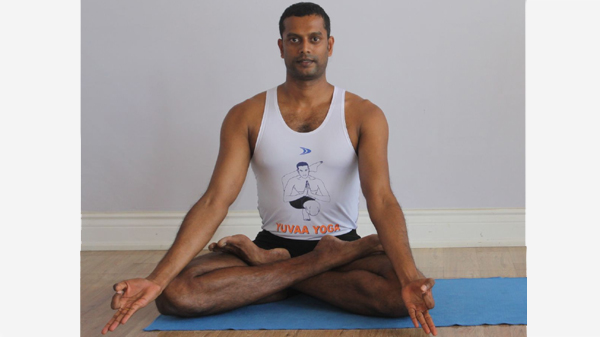
Padmasana
Sit in a comfortable posture with your legs stretched in front of you
Bend your right leg such that your right ankle is brought to your left hip crease
Gently bend your left leg, cross it over your right leg so that it reaches the right hip crease
Breathe out and lengthen your spine (stretch upper body) to keep your shoulders in line with your hips and both knees reaching the mat
Place your hands in chin mudra and extend your hands in front of your knees.
Gaze at the tip of your nose or close your eyes
Hold for 8 to 10 breaths.
Repeat on opposite side.
Benefits: This is the optimal meditative posture rooting you to the earth since your full lower body is grounded
All the chakras are aligned in one vertical line allowing the free flow of energy within the nadis
This is the only posture that activates your body, heart and soul simultaneously
Cures and prevents all digestive disorders
Helps to reduce and burn fat around hips, thighs and waist
Helps to improve blood circulation to your lower abdomen, pelvic region, knees and ankles
Stretches the medial aspect of the knees which creates the flexibility for most advanced postures
Helps to improve the arches in your feet which improves plantar fasciitis
The lungs are opened fully which allows you to consume and process more oxygen
Name: Padma means lotus (this posture resembles a lotus)
See Photos
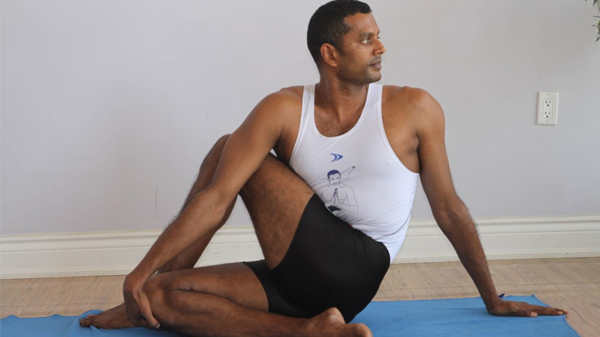
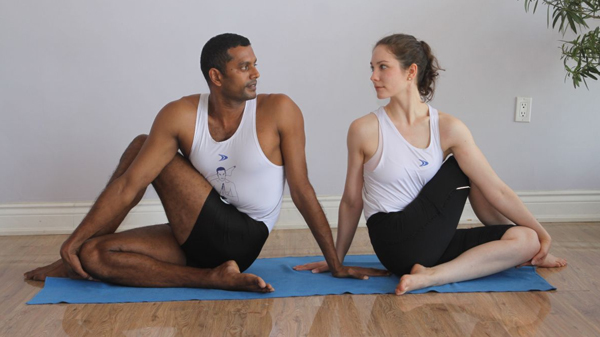
Ardha Matsyendrasana
Sit in a comfortable posture by stretching both legs straight in front of you
Bend your right knee and cross it over your left leg
Gently bend your left leg such that the left heel reaches your right buttocks
Twist your whole body to your right
Lock your left armpit to your right thigh by stretching your right arm back such that both shoulders are in one line
Hold your left knee with your left hand by
Breathing out from your lower abdomen open your shoulders wider and turn your head back to gaze over your right shoulder
Hold for 8 to 10 breaths
Repeat on opposite side.
Benefits: When you twist to your right, you activate your spleen
When you to your left the liver is activated
Activates the adrenal glands
Helps to burn excess fat from waist, hips and thighs
The crisscross stretch happening in the upper body helps to open the lungs (twisting to left, right lung opens, twisting to right, left lung opens)
By twisting the pancreas is activated which helps to cure and prevent diabetes, digestive disorders
This posture gives vigor and strength
It stretches your shoulders blades, scapula and rotator cuffs of shoulders
Cures shoulder disorders such as frozen shoulder, lower back pain, and stretches the spine (laterally?
Name: Ardha means half, Matchayandra is the name of a saint (half saint)
Poorna Matchayandrasana (alternate version of posture)--bottom leg in half lotus (most advanced position) poorna means full
Ardha (half) Matchya means fish (half fish)
See Photos
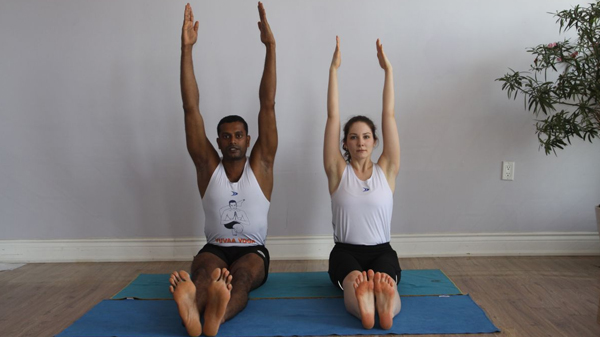
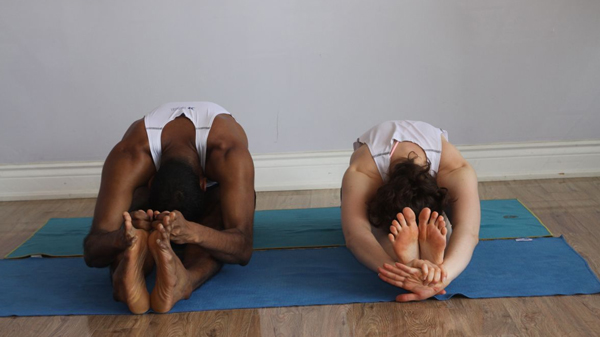
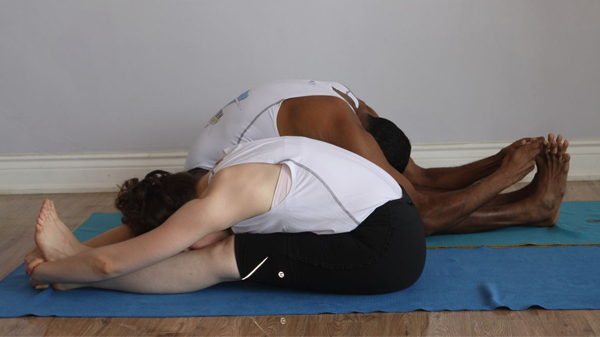
Patchimottanasana/Bramacharyasanam
Sit straight with heels together.
Inhale and lift arms up to sky, exhale and fold forward
Relax the lower abdomen to extend your arms to your heels and bring your chest, chin and face closer to your legs
Variation: Try to catch your big toes and pull them towards you by reaching your elbow down and taking your head, chest, chin and face closer to your legs
Hold for 8 to 10 breaths
Benefits: Doing this posture everyday extends your lifespan since you are pressing your abdominal organs and bringing your lungs as close as possible to the ground increasing blood flow to the upper body (nourishing cells, vital organs)
Helps to regulate the blood flow around your hip and your waist region.
Reduces excess of fat around your hips, abdomen and waist region.
Regulates and activates your digestive system.
Also known as Bramacharyasanam because the gonad glands are compressed which regulates your sexual desire
The heart and lungs are kept in a straight line so the upper body receives improved blood flow to nourish the vital organs
Name: Patchi means bird, motta means face--as posture resembles a bird’s face
See Photos
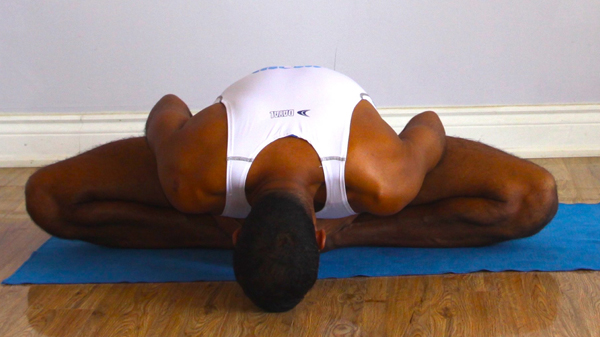
Baddhokonasana/Kudhapadasana
Sit down in a comfortable posture
Bend your knees and bring the soles of your feet together
Try to hold your toes and slowly pull your heels as close as possible to your perineum
Use your elbows to press your thighs towards the mat
Broaden your chest and shoulders and stretch your cervical muscles by lengthening your spine to stay erect
Variation: Extend your lower back, breathe out from your abdomen and slowly fold forward to reach your forhead or chin to the mat
Breathing is deep and smooth
Hold for 8 to 10 breaths.
Benefits: Very beneficial for pregnant women and helps to cure and prevent menstrual cramps
Also helps to reduce fat around hips, waist and thighs
Stretches your adductors, abductors, glutes, hip extensors and hip flexors
Base for hip opening postures and splits
Helps to cure and prevent digestive disorders by opening your hips and perineum improving excretion of waste material from system
By bending forward you stretch your lower back/erector spinae, gluteal muscles and piriformis
Name: Kudhapadasana--kudha means perineum/anus, pada means legs (bringing legs closer to the perineum/anus
Baddhakonasana--Baddha means bound, kona means angle (bound angle)
See Photos
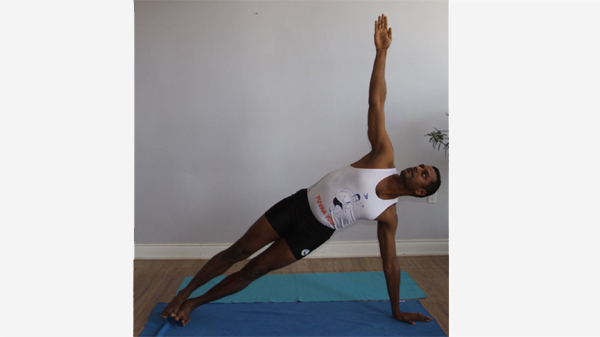
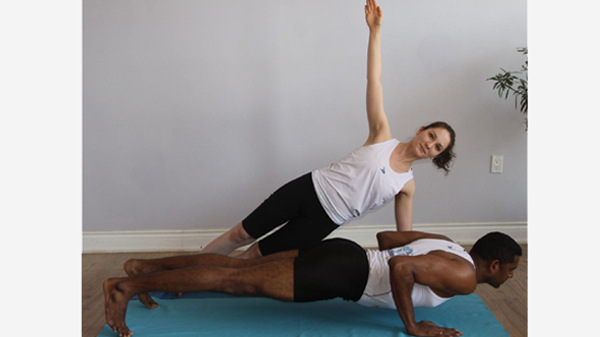
Dhandasana
Lie down on your lateral side
Bend your right knee and stretch your left leg laterally by placing your right hand on the mat below your shoulder, straightening the elbow
Once you are comfortable in this variation, stretch your right leg and your left hand towards the ceiling
Gently place your left leg on your right in line with your hips and shoulders
Your right ankle, knees, hips and shoulders should be in a straight line (diagonally up from floor)
Variation: Chaturanga: place both hands on mat shoulder-width apart and your feet hip width apart
Bend your elbows 90 degrees so that your whole body is parallel to the mat
Breathing is deep and smooth
Hold for 8 to 10 breaths on each side.
Benefits: Strengthens the core, shoulders, and hip flexors
Creates a sense of balance and weight bearing on the hands
Basics for all hand balance postures
Name: Dhanda means stick--in this posture you are straight like a stick
See Photos
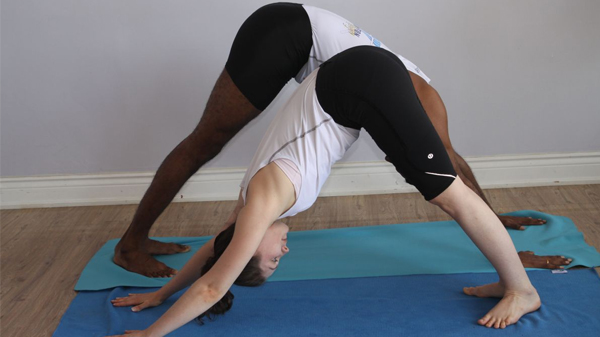
Adho Mukaswanasana
Stand straight with heels together (make a “V” shape with feet)
Bend your knees and reach your palms to mat
From there, slowly stretch your knees, shoulders and elbows
Lift your hips towards the ceiling
Tuck your head in between your arms
Heels together, toes parted.
(ears in line or slightly in front of forearms).
Gaze towards your navel region
By pressing your heels down, push your palms and torso towards the mat to reach your head further down
Hold for 8 to 10 breaths.
Benefits: Improves blood circulation in the lower abdomen and to the head regions which helps to cure and prevent gray hair due to increased blood flow to scalp
As head is below heart, blood flow is increased to your head and facial region which helps to give you a natural glow.
Prevents and cures heart diseases
Regulates your respiratory system since your head is below your heart (increased and inverted blood flow)
Creates a sense of weight bearing on the upper body which forms the foundation for handstands and inversions
Helps to lengthen the hamstrings, calves and specifically the tibialis and gastronomes
Helps to regulate the blood flow around your hip and your waist region.
Reduces excess of fat around your hips, abdomen and waist region.
Regulates and activates your digestive system.
Helps to prevent and cure sinusitis
Alleviates migraine headaches
Stretches shoulder extensors and shoulder rotator cuffs
Name: Adho means down, muka means face, swana means dog
See Photos
Samakonasana
Stand with legs wide apart.
Distribute your weight equally to both feet
From your hips breathe out while raise hands up and fold forward
Try to reach your elbows to the mat and bring your elbows as close as possible towards your body so that you can reach your head to the mat.
Variation: Hold your big toes and bring your crown as close as possible to the ground.
Hold for 8 to 10 breaths.
Benefits: Helps to stretch your lower body especially hamstrings, calves, glutes and adductors.
Creates a sense of balance and equal weight distribution between the legs.
Helps to regulate the blood flow around your hip and your waist region.
Reduces excess of fat around your hips, abdomen and waist region.
Regulates and activates your digestive system.
As head is below heart, blood flow is increased to your head and facial region which helps to give you a natural glow.
Helps to prevent and cure sinusitis
Alleviates migraine headaches
Regulates your respiratory system since your head is below your heart (increased and inverted blood flow)
Stretches shoulder extensors and shoulder rotator cuffs
Helps to increase quadricep strength and regulates blood flow to knees and ankles
Preparatory posture for headstand or scorpion
Name: Sama means equal (equal shifting of weight), Kona means angle (Samakona- equal angle)
See Photos
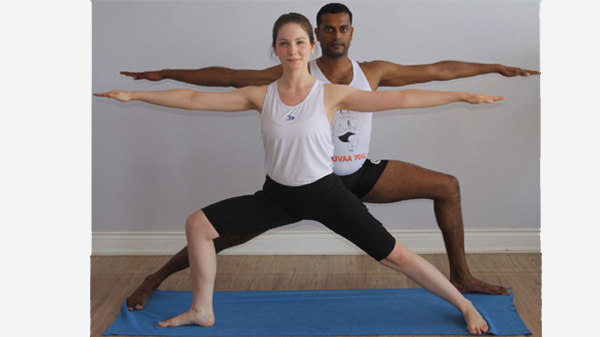
Virasana/Virabhadhrasana
Stand with legs wide apart
Slowly bend your right knee such that you are creating a 90 degree angle in your knee and so that the inner thigh is parallel to the mat.
Press your left heel into the mat and create an external rotation in your hip flexors so that your hips, left knee, ankles and heels are in a line
Try to open your shoulders by stretching your arms laterally keeping your shoulders aligned with your hips and arms in the same plane and your knees.
Shift 60 percent of your weight to your left heel and 40 percent to your right.
Keep your hips wide open and sink hips towards mat for deep hip opening.
Gaze at a point for balance (basic practice for tratakam/dharanam--focusing on one point)
Hold for 8 to 10 breaths.
Repeat on opposite side.
Benefits: Helps to reduce fat around thighs and lower abdomen
This posture is boon for the sportsman
Helps to regulate and activate your digestive system
Regulates menstruation and helps to alleviate menstrual cramps
Helps to increase male sperm count due to opening of hips and increasing blood flow to lower abdomen
Name: Vira means warrior and this pose harnesses the power of a warrior
Virabhadra means vira= warrior, bhadra= general appointed by lord Siva to fight the war on his behalf
See Photos
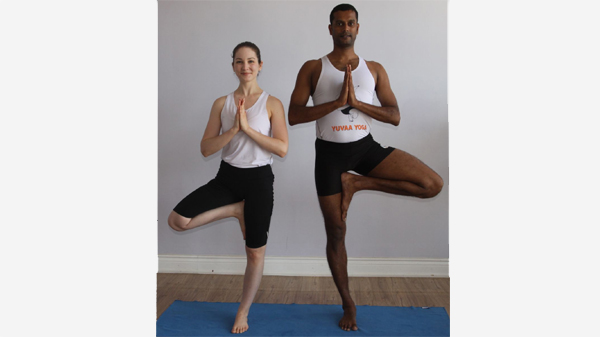
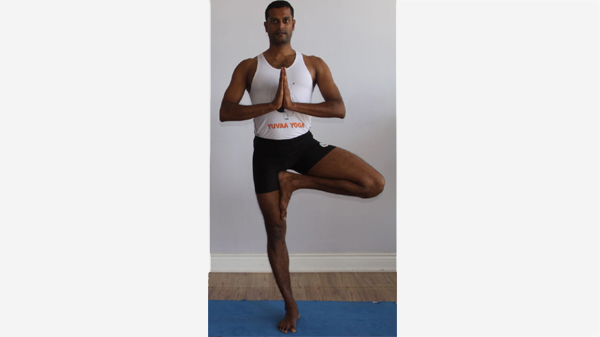
Vrikshasana/Ekapadasa
Stand straight legs apart, bend your right leg and pull it as close as possible to your upper thighs and as close as possible to your perineum
Gently breathe out and take your palms together, close to your sternum with elbows wide open. Press palms together.
Adjust your raised leg by bringing it to your lateral side as much as possible.
Shoulders and hips are in line
Gaze at a point for balance (basic practice for tratakam/dharanam--focusing on one point)
Hold for 8 to 10 breaths.
Repeat on opposite side.
Benefits: This posture helps to improve memory.
For “busy-bee” (find other word) practitioners this posture is very calming.
Working suri nadi and chandra nadi (right leg raised, left lungs will be worked greater, left leg raised, right lungs will be able to inflate larger)
This posture is the counter-posture for headstand (shirshasana)
This is also a meditative posture which helps you achieve your desired goals due to the inner strength harnessed.
(All balancing postures increase inner strength)
Name: Ekapadasana--Eka means one, Pada means leg (standing on one leg)
Vrikshasana--Vriksha means tree (in this posture you are standing strong like a tree)
See Photos
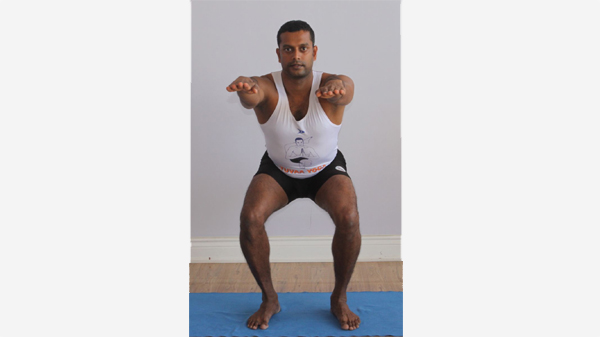
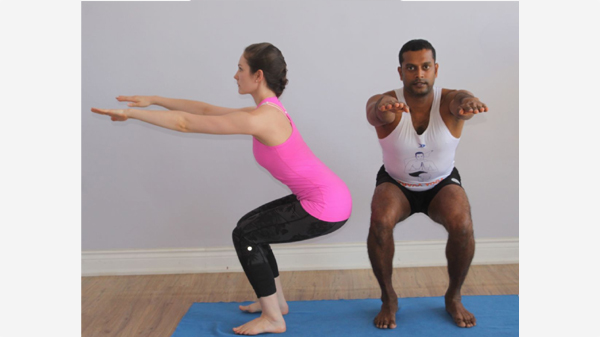
Utkatasana
Stand with your legs shoulder width apart.
Stretch your hands in front to shoulder level
By exhaling, bend your knees and lower your hips until your thighs are parallel to the mat (90 degrees from buttocks through knees and down to ankles)
Shoulders should be in line with the hips
Maintain spine in alignment with hips as much as possible to get the full benefits from this posture
Gaze at a point for balance (basic practice for tratakam/dharanam--focusing on one point)
Hold for 8 to 10 breaths.
Benefits: At the same time knees and hips are contracted which helps to activate the hip and the thigh region
Generate strength and vigor for your body especially the lower body
Helps to burn fat around waist and hip region
Helps to strengthen your ankles and knees
Gives a sense of steadiness to the upper body as well
Name explanation: Utkat means chair, and the way the body is positioned in this posture resembles a chair
When you are doing this posture regularly your heart will be elevated and lightened as though you are sitting on a throne
See Photos
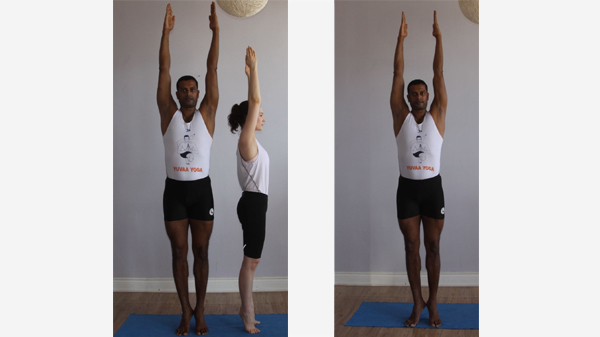
Tadasana/Talasana
Stand straight with heels together and toes apart making a “V”.
Slowly breathe in, raise hands above head and heels simultaneously.
Gaze at a point for balance (basic practice for tratakam/dharanam--focusing on one point)
Stay for 8-10 breaths.
Benefits: 44 different types of nerves travel from the toes to the other parts of the body connecting your glands
Starting with this posture will help to activate your glands by the pressure which is created on your toes
The whole body weight is shifted to the toes which helps to stretch the joints in the body thereby curing stiffness or pain in the ankles, knees, lower back, and rotator cuffs of the shoulders.
Explanation for the name: tal means legs and this posture focuses on the legs
See Photos